|
||||||||||||
|
|
|
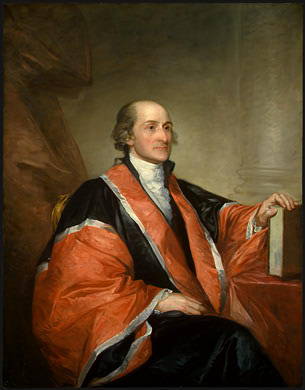
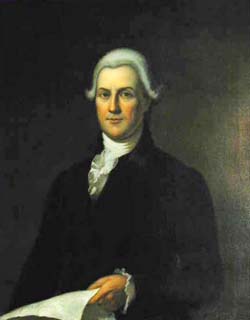
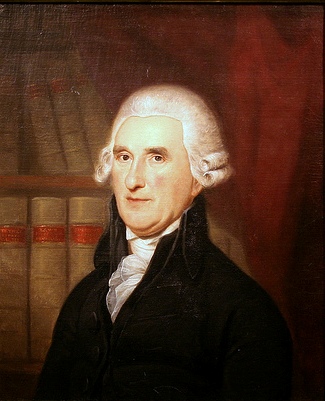
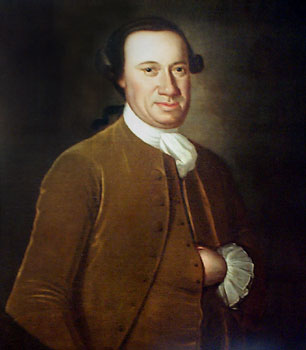
The Presidents Before George Washington The government under which America lives is based on its Constitution. However, this wasn't always the case. First, the same government which declared the United States to be a free and independent nation — the Continental Congress — was the only legitimate government of the nation. Seven men served as Presidents of the Continental Congress . Later, the Articles of Confederation were adopted, and seven more men took the office of President before Washington.
Continental Congress Presidents During the course of its existence, the Continental Congress had seven men serve as its presiding officer; sometimes this earned them the title of President of the United States. Really, the job of President of the Continental Congress was more of a premiership than a presidency. They had no special executive powers and this led to a big gray area. Here is a list of the Presidents of the Continental Congress:
Presidents Under the Articles Eventually, a government was constructed, which gave the most power to the individual states instead of to the federal government. This government was outlined with the Articles of Confederation. It stood as the national authority in America from 1 March, 1781, when it was ratified by the states, until 1789, when the Federalists got the Constitution adopted officially. The Articles of Confederation weren't what the country needed. They didn't work well. This is one of the reasons that the Articles were replaced, and one reason why its presidents are largely forgotten. Though most of the power was handed to the state governments under the Articles of Confederation, there was a national government which had an office of 'President'. Basically, the job of this man was not to do too much while also not letting the country fall apart. Officially, the man was 'President of a Committee of the States' or 'President of Congress of the United States, Assembled'4, and was only allowed a one-year term every three years. He was given some executive powers, similar to those of the Constitutional Presidency, but on a much smaller scale. Presidents under the Articles of Confederation can therefore be considered presidents of the United States, only less powerful than the presidents we are familiar with.
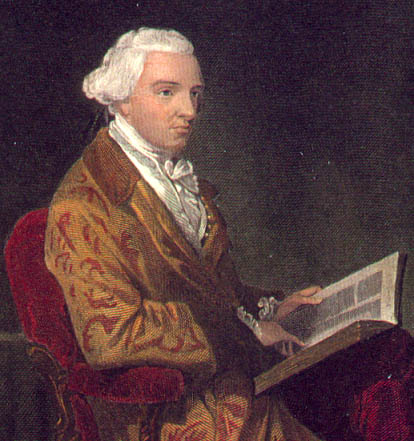
John Hanson To those who do not consider Presidents of the Continental Congress to be Presidents of the United States and Presidents of the Articles of Confederation to be the holders of that office, John Hanson was the first President of the United States. Some have devoted their lives to recognizing the man as the first President. Hanson was from Maryland. His state was extremely key to the adoption of the Articles of Confederation. It had refused to agree to them until New York and Virginia gave up claims to their western lands, as it felt that they would become too powerful with them. This was agreed to, and Maryland signed the Articles of Confederation. Shortly afterwards, the Congress unanimously elected John Hanson, who was one of their number and highly respected, as President. He took the office on 5 November, 1781. Hanson had to deal with an unruly group of soldiers who demanded payment and threatened to install George Washington as a monarch. The President dealt with this, and managed to avert rebellion. It was quite something to be proud of, really. He also ordered European nations out of America and established a system of government, complete with a Treasury Department, a Secretary of War and a State Department. Perhaps the greatest evidence that Hanson was the first president is that he established the Great Seal of the United States, which all following presidents have used on their documents. After one year, Hanson resigned the office, and assumed a relatively quiet life. He disliked the idea of a Constitution, and remained opposed to the Federalist ideals until his death in 1783.
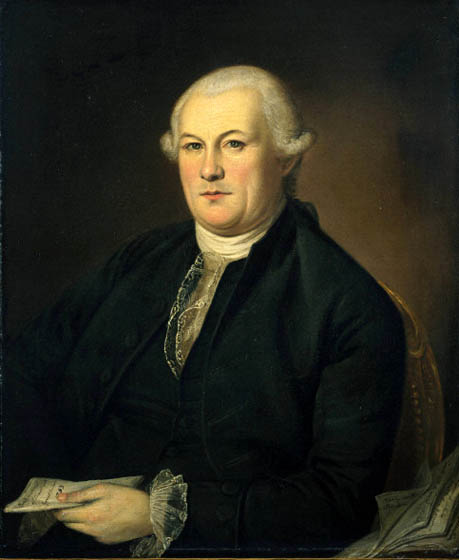
Elias Boudinot One of the most powerful revolutionaries in New Jersey, Elias Boudinot was born in 1740 in Philadelphia. He was one of the benefactors of Alexander Hamilton when Hamilton was a young immigrant. A lawyer and a highly religious man, Boudinot quickly established himself as one of the most powerful men in the colonies. He was elected to the New Jersey assembly in 1775, and helped promote enlistment into the army to fight Britain. In 1777, he was made Commissary General of Prisoners, and accordingly, he was made a Colonel. Later that year, he was made a Delegate to the Continental Congress, as well as being in charge of prisoners. In 1778, he resigned his prisoner post because its responsibilites barred him from attending Congress. He was re-elected to Congress in 1781, and was made President of Congress in 1782. During his term, the Treaty of Paris was signed, in which Britain recognised American independence. Some people put Boudinot down as the first President, arguing the US wasn't a true nation until Britain recognised its independence. His term as President ran out shortly after this was signed. After the Constitution was ratified, Boudinot was a Representative for the state of New Jersey in 1789. He served two more terms, and was appointed by George Washington as Director of the US Mint from 1795 - 1805. He was an excellent director, and produced the first coins in the history of the nation. He died in 1821.
Thomas Mifflin Thomas Mifflin, born in 1744 in Philadelphia, was one of Pennsylvania's founding fathers. He went to the University of Pennsylvania, and then joined the legislature of his colony, before being elected to the Continental Congress in 1774. He worked for George Washington as an aide and then for the army in general. He was made a Major-General in 1777 and then a member of the Board of War. He rejoined the Congress in 1782, and was made its President in 1783. He also was the Speaker of the Pennsylvania House of Representatives and then a delegate to the Constitutional Convention. In 1788, Mifflin took an important state-wide post as President of the Supreme Executive Council of Pennsylvania. He also took a leading role in the State Constitutional Convention, making a Pennsylvania government based on the national government. Benefiting from the design he helped create, Mifflin was elected Governor of Pennsylvania and to the House of Representatives, until his death in 1800.
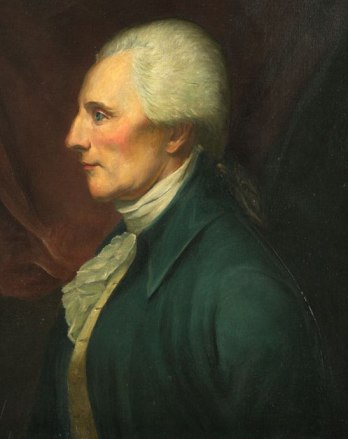
Richard Henry Lee Richard Henry Lee was in fact the first Virginian President of the United States. His family was a noble one, and he fought in the French and Indian War on the British side. He returned home, and became a member of the Virginia House of Burgesses, becoming familiar with many of the great men who would become leaders in the Patriot cause during the American Revolution. In 1774, Lee was appointed to the First Continental Congress, and was one of its best speakers. He helped lead the Congress into declaring independence. He served in Congress throughout the war, while retaining his post in the House of Burgesses. In 1783, as one of the most senior members, he was made President of the Congress. Though he was opposed to the Federalist system of government, Lee took a post as a Senator in the new post-Constitution government. Interestingly, his descendant Robert E Lee would become the leader of the Confederate forces during the American Civil War.
John Hancock Hancock served as President under the Articles from 1785 - 1786. If you consider his earlier 'presidency' of the Continental Congress to be a true presidency, then the oft-repeated fact that Grover Cleveland was the only man to serve two non-consecutive terms is false.
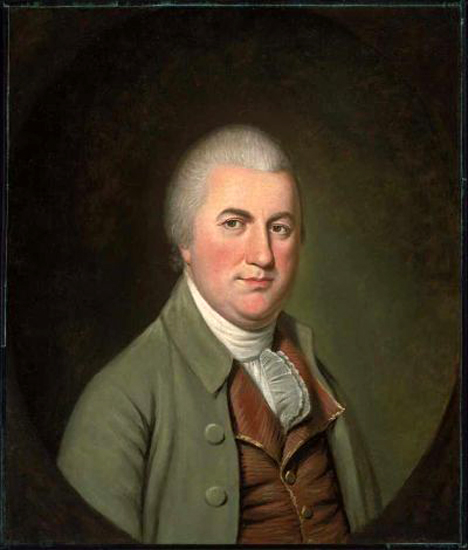
Nathaniel Gorham Nathaniel Gorham was a Massachusetts man from a normal family. In 1771, he was elected to the State Legislature and served in many, many state-wide offices during the Revolution. He was a delegate to the Constitutional Convention. In 1782, he was elected to Congress, and then again in 1785. In 1786, he earned the office of President of the Congress. He also helped Massachusetts ratify the US Constitution. Gorham fell from the heights of Massachusetts society after a financial mistake from buying land that led to his losing his fortune. He died in 1796.
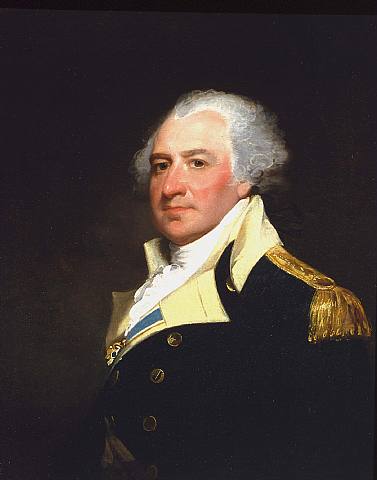
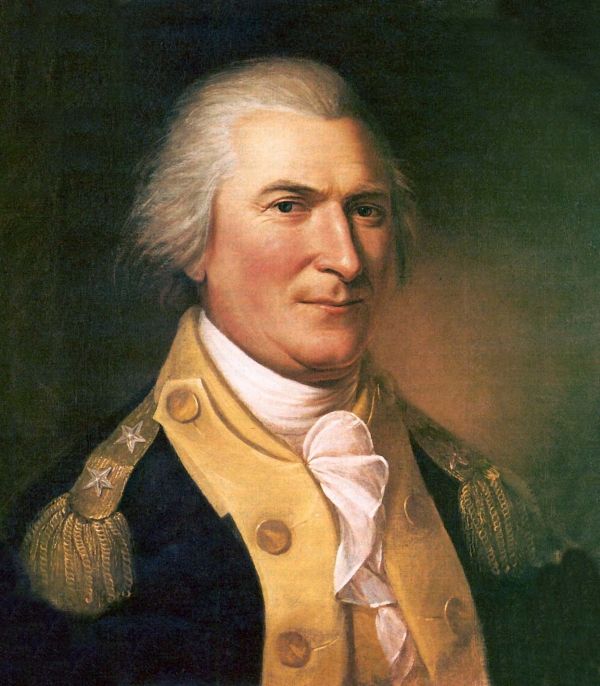
Arthur St Clair Arthur St Clair was born in 1736 in Scotland. If he were born today in Scotland, he would be ineligible for the Presidency of the USA under the Constitution. He served in the French and Indian War, retiring as a lieutenant. He gained experience with the frontier lands and worked for the British governor of Pennsylvania with the frontier lands the state controlled. During the American Revolution, St Clair backed the Patriots and held various administrative posts before being appointed as a colonel for the Continental Army. He was one of those who attacked Canada in 1775 and supported General Washington in the great victories of Trenton and Princeton. He was put in charge of Fort Ticonderoga, an important strategic location for the Americans to hold, but abandoned it. in 1785, Pennsylvania elected St Clair as a delegate to the Continental Congress, and he served as President of the Congress in 1787. After this, he was appointed Governor of the Northwest Territories and he worked on opening it up further to white settlers. St Clair saw quite a bit of Indian resistance because of the way he treated them. When the territory of Ohio tried to gain admittance to the Union, St Clair notoriously opposed its entrance as one state and hoped to have it split up, because that would help the waning Federalist party (which he backed) to maintain control of the Senate. Eventually, he lost most of his money and died in 1818. Ohio was admitted as one state.
Cyrus Griffin Cyrus Griffin was the last President before the Constitution allowed George Washington to become America's first President. He was born in 1749 in Virginia and was a noteworthy lawyer of the Patriot cause. He took part in the Virginia state government and, in 1778, was elected as a delegate to the Continental Congress. He was elected as a member of the US Congress in 1787 was elected as its President in 1788 and served until the government was replaced the next year.
|