|
||||||||||||
  |
|
Wind Energy
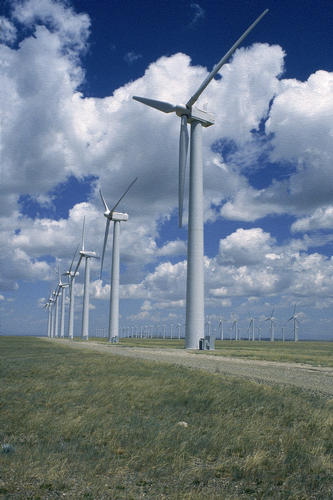
Wind is a form of solar energy. Winds are caused by the uneven heating of the atmosphere by the sun, the irregularities of the earth's surface, and rotation of the earth. Wind flow patterns are modified by the earth's terrain, bodies of water, and vegetative cover. This wind flow, or motion energy, when "harvested" by modern wind turbines, can be used to generate electricity.
The terms "wind energy" or "wind power" describe the process by which the wind is used to generate mechanical power or electricity. Wind turbines convert the kinetic energy in the wind into mechanical power. This mechanical power can be used for specific tasks (such as grinding grain or pumping water) or a generator can convert this mechanical power into electricity to power homes, businesses, schools, and the like.
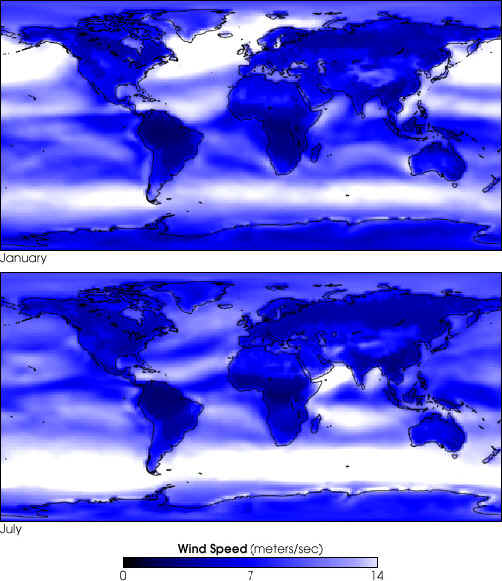
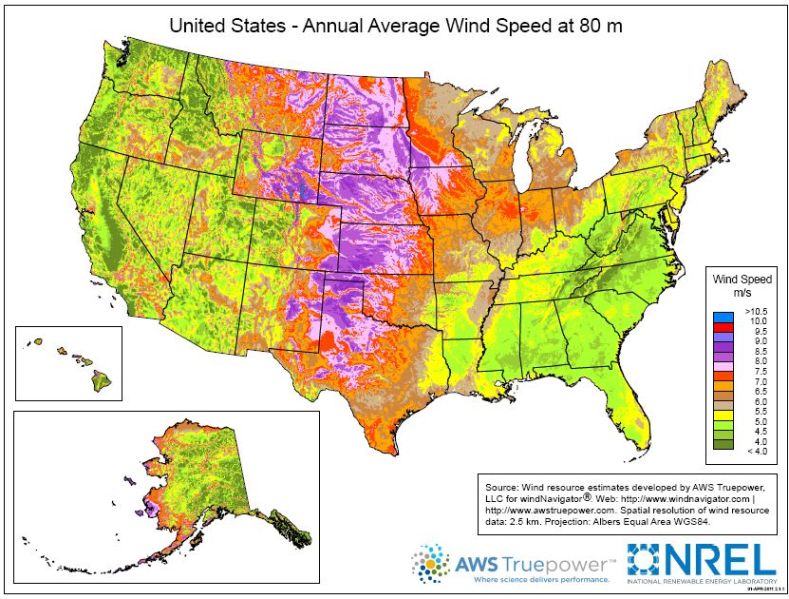
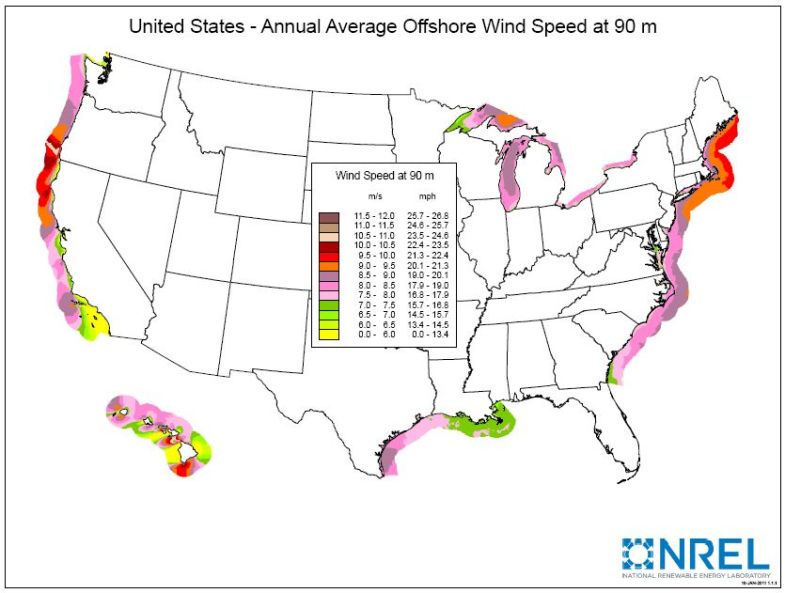
Global maps of average wind speed help researchers determine where to develop wind energy. Wind turbines (high-tech windmills) can generate power in places far from power plants and without an electricity grid�but planners need to know where there is sufficient wind for the turbines to operate efficiently. A team at NASA�s Langley Research Center developed these maps, and maps of solar insolation, and provide them free of charge. Private companies are using these data to design, build, and market new technologies for harnessing this energy.
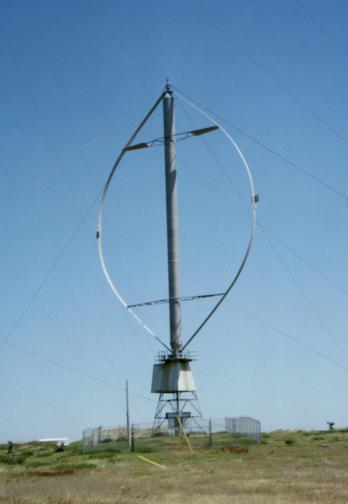
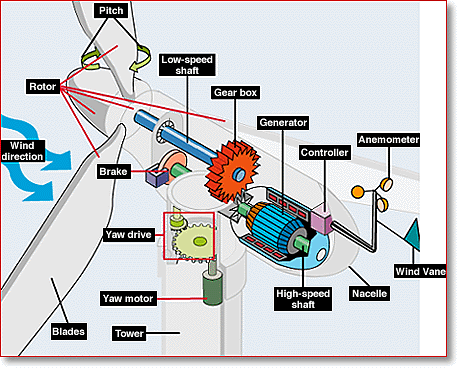
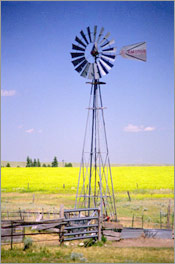
How Wind Power Is GeneratedThe terms "wind energy" or "wind power" describe the process by which the wind is used to generate mechanical power or electricity. Wind turbines convert the kinetic energy in the wind into mechanical power. This mechanical power can be used for specific tasks (such as grinding grain or pumping water) or a generator can convert this mechanical power into electricity to power homes, businesses, schools, and the like. Wind TurbinesWind turbines, like aircraft propeller blades, turn in the moving air and power an electric generator that supplies an electric current. Simply stated, a wind turbine is the opposite of a fan. Instead of using electricity to make wind, like a fan, wind turbines use wind to make electricity. The wind turns the blades, which spin a shaft, which connects to a generator and makes electricity. Wind Turbine TypesModern wind turbines fall into two basic groups; the horizontal-axis variety, like the traditional farm windmills used for pumping water, and the vertical-axis design, like the eggbeater-style Darrieus model, named after its French inventor. Most large modern wind turbines are horizontal-axis turbines.
Turbine Components
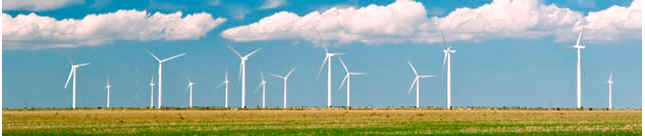
Turbine ConfigurationsWind turbines are often grouped together into a single wind power plant, also known as a wind farm, and generate bulk electrical power. Electricity from these turbines is fed into a utility grid and distributed to customers, just as with conventional power plants. Wind Turbine Size and Power RatingsWind turbines are available in a variety of sizes, and therefore power ratings. The largest machine has blades that span more than the length of a football field, stands 20 building stories high, and produces enough electricity to power 1,400 homes. A small home-sized wind machine has rotors between 8 and 25 feet in diameter and stands upwards of 30 feet and can supply the power needs of an all-electric home or small business. Utility-scale turbines range in size from 50 to 750 kilowatts. Single small turbines, below 50 kilowatts, are used for homes, telecommunications dishes, or water pumping.
Advantages and Disadvantages of Wind-Generated ElectricityA Renewable Non-Polluting ResourceWind energy is a free, renewable resource, so no matter how much is used today, there will still be the same supply in the future. Wind energy is also a source of clean, non-polluting, electricity. Unlike conventional power plants, wind plants emit no air pollutants or greenhouse gases. According to the U.S. Department of Energy, in 1990, California's wind power plants offset the emission of more than 2.5 billion pounds of carbon dioxide, and 15 million pounds of other pollutants that would have otherwise been produced. It would take a forest of 90 million to 175 million trees to provide the same air quality. Cost IssuesEven though the cost of wind power has decreased dramatically in the past 10 years, the technology requires a higher initial investment than fossil-fueled generators. Roughly 80% of the cost is the machinery, with the balance being site preparation and installation. If wind generating systems are compared with fossil-fueled systems on a "life-cycle" cost basis (counting fuel and operating expenses for the life of the generator), however, wind costs are much more competitive with other generating technologies because there is no fuel to purchase and minimal operating expenses. Environmental ConcernsAlthough wind power plants have relatively little impact on the environment compared to fossil fuel power plants, there is some concern over the noise produced by the rotor blades, aesthetic (visual) impacts, and birds and bats having been killed (avian/bat mortality) by flying into the rotors. Most of these problems have been resolved or greatly reduced through technological development or by properly siting wind plants. Supply and Transport IssuesThe major challenge to using wind as a source of power is that it is intermittent and does not always blow when electricity is needed. Wind cannot be stored (although wind-generated electricity can be stored, if batteries are used), and not all winds can be harnessed to meet the timing of electricity demands. Further, good wind sites are often located in remote locations far from areas of electric power demand (such as cities). Finally, wind resource development may compete with other uses for the land, and those alternative uses may be more highly valued than electricity generation. However, wind turbines can be located on land that is also used for grazing or even farming.
All renewable energy (except tidal and geothermal power), and even the energy in fossil fuels, ultimately comes from the sun. The sun radiates 100,000,000,000,000 kilowatt hours of energy to the earth per hour. In other words, the earth receives 10 to the 18th power of watts of power. About 1 to 2 per cent of the energy coming from the sun is converted into wind energy. That is about 50 to 100 times more than the energy converted into biomass by all plants on earth.
After reaching 1,000 MW of wind energy in 1985, it took more than a decade for wind to reach the 2,000-MW mark in 1999. Since then, installed capacity has grown fivefold. Today, U.S. wind energy installations produce enough electricity on a typical day to power the equivalent of over 18 million homes.
The History of Wind Power
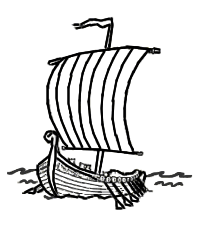
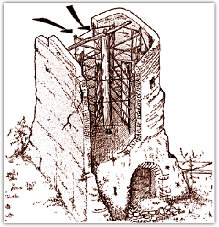
Since ancient times, people have harnessed the winds energy. Over 5,000 years ago, the ancient Egyptians used wind to sail ships on the Nile River. By 200 B.C., simple windmills in China were pumping water, while vertical-axis windmills with woven reed sails were grinding grain in Persia and the Middle East The earliest known windmills were in Persia (Iran).
These early windmills looked like large paddle wheels.
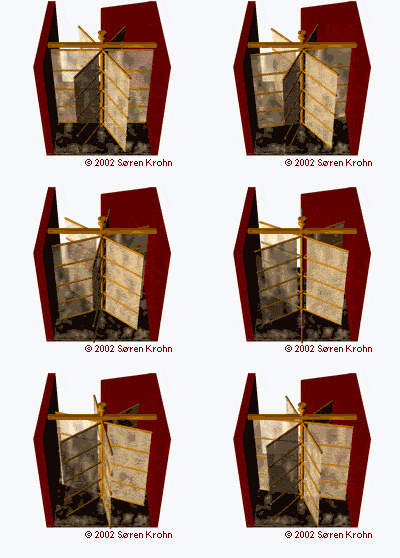
A model of a Persian windmill. Vertical-axis windmills were developed before 500 - 900 AD (some place their invention much earlier) to raise water and mill corn and were still in use in the 1970's in the Zahedan region of Iran.
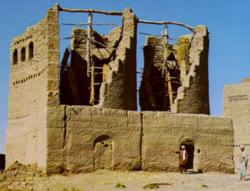
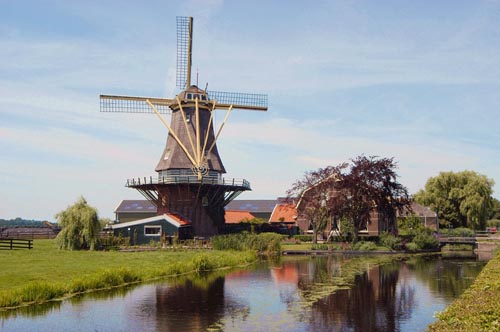
Ruins of Persian type windmills in Khorasan (a region that extends across Iran, Turkmenistan and Afghanistan). New ways of using the energy of the wind eventually spread around the world. By the 11th century, people in the Middle East were using windmills extensively for food production; returning merchants and crusaders carried this idea back to Europe. The Dutch refined the windmill and adapted it for draining lakes and marshes in the Rhine River Delta.
American colonists used windmills to grind wheat and corn, to pump water, and to cut wood at sawmills.
Industrialization, first in Europe and later in America, led to a gradual decline in the use of windmills. The steam engine replaced European water-pumping windmills. In the 1930s, the Rural Electrification Administration's programs brought inexpensive electric power to most rural areas in the United States. However, industrialization also sparked the development of larger windmills to generate electricity. Commonly called wind turbines, these machines appeared in Denmark as early as 1890. In the 1940s the largest wind turbine of the time began operating on a Vermont hilltop known as Grandpa's Knob. This turbine, rated at 1.25 megawatts in winds of about 30 mph, fed electric power to the local utility network for several months during World War II. The popularity of using the energy in the wind has always fluctuated with the price of fossil fuels. When fuel prices fell after World War II, interest in wind turbines waned. But when the price of oil skyrocketed in the 1970s, so did worldwide interest in wind turbine generators. In the early 1980s wind energy really took off in California, partly because of state policies that encouraged renewable energy sources. Support for wind development has since spread to other states.
credit: NOAA, U.S. DOE, American Wind Energy Association, Bureau of Land Management, Sandia National Labooratory, The British Wind Energy Association, The World Wind Energy Association (WWEA), The University of Illinois |