|
||||||||||||
|
|
|
Penguins
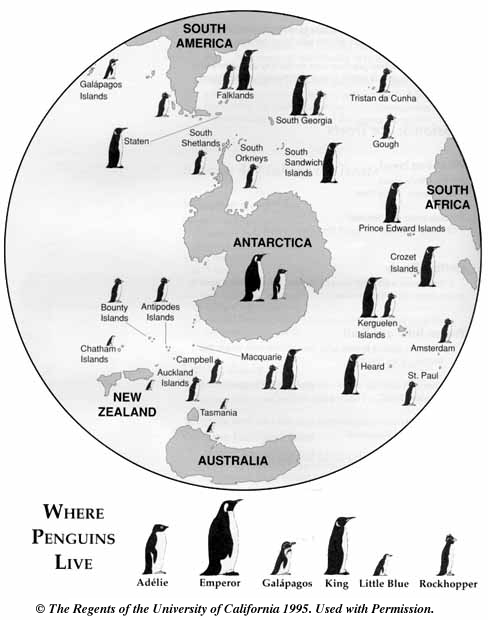
There are 17 species of penguins some of which are found as far north as the equator. Penguins are categorized into three families: brush-tail, crested, and king/emperor penguins. Of the 17 species only six are found in Antarctica (Adélies, Chinstraps, Emperors, Gentoos, Macaronis, and Rockhoppers).
Some scientists recognize an 18th species: the white-flippered variety of fairy penguin, Eudyptula albosignata.
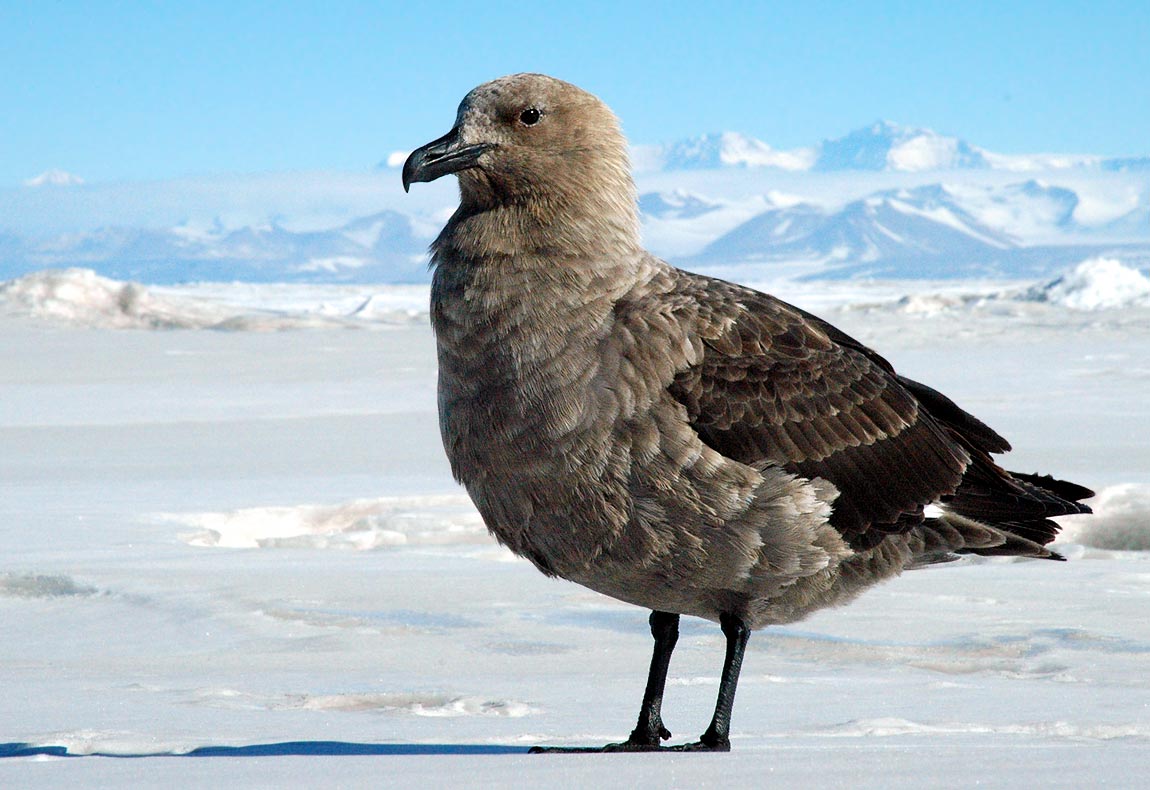
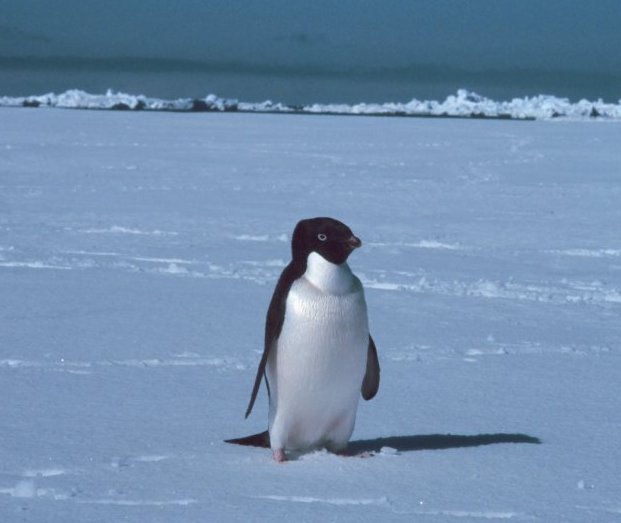
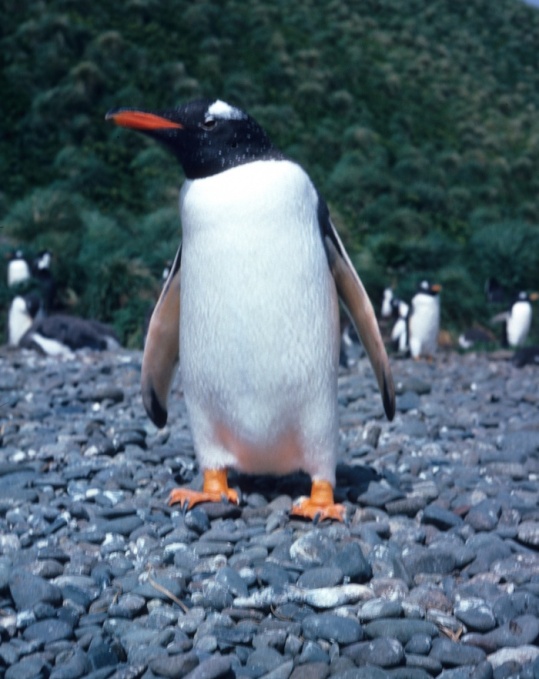
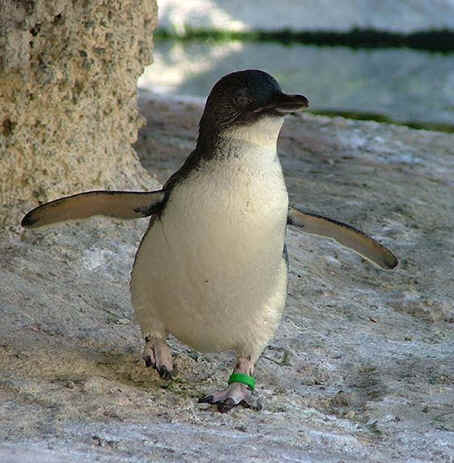
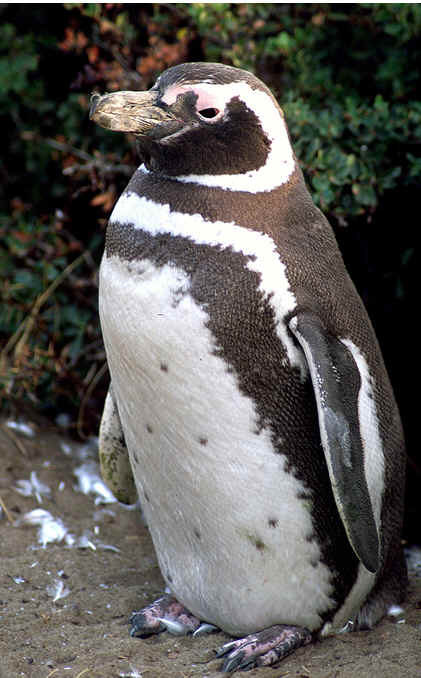
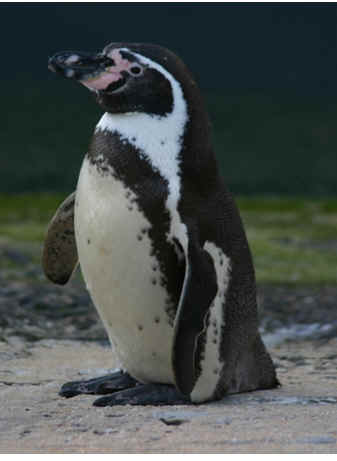
Skua Size 1. The emperor penguin is the largest of all living penguins, standing 1.1 m (3.7 ft.) and weighing 27 to 41 kg (60-90 lb.). 2. The smallest of the penguins is the fairy penguin, standing just 41 cm (16 in.) and weighing about 1 kg (2.2 lb.). For a complete listing of sizes by species. Body shape 1 .The penguin body is fusiform and streamlined, adapted for swimming A penguin has a large head, short neck, and elongated body. 2. The tail is short and wedge-shaped . 3. The legs and webbed feet are set far back on the body, which causes penguins to stand upright when on land (Marchant, 1990). Coloration 1. All adult penguins are countershaded; that is they are dark on their dorsal (back) surfaces and white on their ventral (underside) surfaces. The dark dorsal side blends in with the dark ocean depths when viewed from above. The light ventral side blends in with the lighter surface of the sea when viewed from below. The result is that predators or prey do not see a contrast between the countershaded animal and the environment. 2. Many species have distinct markings and coloration. a. The emperor has a black head, chin, and throat with broad yellow ear patches on the sides of the head (Marchant, 1990). b. The king penguin has a black head, chin, and throat with vivid orange, tear-shaped ear patches. The orange coloration extends to the upper chest (Marchant, 1990). c. The Adélie has a black head. Distinctive white eye rings appear during the breeding season (Marchant, 1990). d. The gentoo has a black head with white eyelids, and a distinct triangular white patch above each eye, usually extending over the head (Marchant, 1990). e. The top of a chinstrap's head is black and the face is white, with a stripe of black extending under the chin. f. The crested penguins (genus Eudyptes), such as the rockhopper and macaroni, are distinguished by orange or yellow feather crests on the sides of the head, above the eyes. g. The yellow-eyed penguin, as its name suggests, has yellow eyes and a stripe of pale yellow feathers extending over its dark head. h. The fairy penguin, also known as the little blue, has slate-blue to black feathers and a white chin and chest. i. Temperate penguins (genus Spheniscus), such as the Humboldt and Magellanic, have unfeathered fleshy areas on the face and one or two distinct black stripes across the chest. 3. Chicks, juveniles, and immature penguins may have slightly different markings than adults. Generally, they appear more drab. Adult markings take a year or longer to develop.
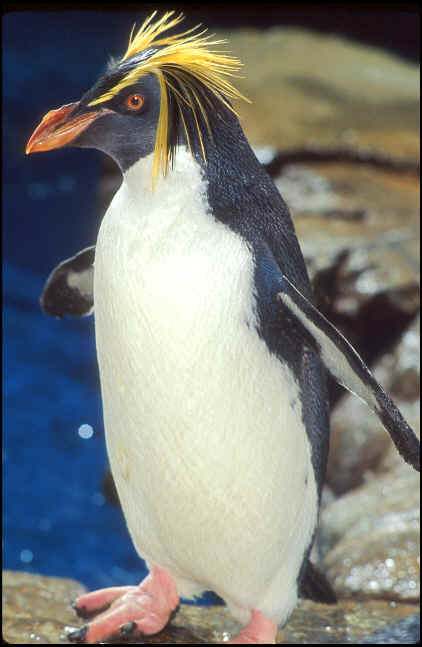
Flippers Wings are modified into paddlelike flippers. The bones are much flattened and, broadened, with the joint of elbow and wrist almost fused. This forms a rigid, tapered, and flat flipper for swimming (Marchant, 1990). Each flipper is covered with short, scale-like feathers. The long wing feathers typical of most birds would be too flexible for swimming through water (Sparks and Soper, 1987). Head 1 . Different species of penguins can be identified by their head and facial markings. 2. Penguins have a variety of bill shapes which are used to capture fish, squid, and crustaceans. Generally, the bill tends to be long and thin in species that are primarily fish eaters, but shorter and stouter in those that mainly feed on krill (del Hoyo, et al., 1992). The mouth is lined with horny, rear-directed spines to aid in swallowing live prey (Marchant, 1990). 3. Eyes. a. The color of irises varies among the species. (1) Many species have brown, reddish-brown, or golden-brown eyes. (2) Rockhopper and macaroni penguins have red eyes. (3) Fairy (little blue) penguins have bluish-gray eyes. (4) As their name implies, yellow-eyed penguins have yellow eyes (Marchant, 1990). b. The pupil of a penguin eye is circular. When constricted, however, the pupil of the king penguin is square (Welty, 1982). c. Like many animals, penguins have a nictitating membrane, sometimes called a third eyelid. This is a clear covering that protects the eye from injury. Legs and feet 1. Penguin legs are short and strong. Feet are webbed, with visible claws. The legs are set far back on the body to aid in streamlining and steering while swimming. This placement also causes penguins to stand vertically and walk upright (Marchant, 1990). 2. Penguins walk with short steps or hops, sometimes using their bills or tails to assist themselves on steep climbs (del Hoyo, et al., 1992). The maximum walking speed for Adélie penguins is 3.9 kph (2.4 mph). Emperors and kings walk slowly and do not hop. The maximum speed for emperors is 2.8 kph (1.7 mph). Some species, like the rockhopper, jump from rock to rock (Miller-Schwarze, 1984; del Hoyo, et al., 1992). 3. Antarctic species can move much faster over ice by "tobogganing" on their bellies, using their flippers and feet to help them move along (Simpson, 1976). Tail The tail is short and wedge-shaped, with 14 to 18 stiff tail feathers. Members of the genus Pygoscelis have longer tail feathers, which they often use as a prop when on land (Marchant, 1990).
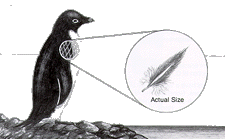
Feathers 1. Shiny feathers uniformly overlap to cover a penguin's skin (del Hoyo, et al., 1992). Feathers are highly specialized-short, broad, and closely spaced, helping to keep water away from the skin. Tufts of down on the feather shafts contribute to the insulative properties of the feathers. 2. Penguins have more feathers than most other birds, with about 70 feathers per square inch. 3. Most penguin species go through one complete molt (shed their feathers) each year, usually after the breeding season. The exception is the Galapagos penguin, which usually goes through two molts annually (del Hoyo, et al., 1992). a. Molting is an essential function, as feathers wear out during the year. Feathers become worn when penguins rub against each other, come in contact with the ground and water, and regularly preen (clean, rearrange, and oil) their feathers (Sparks and Soper, 1987). b. The new feather grows under the old one, pushing it out. The old feather does not fall out until the new one is completely in place. The molt is patchy and can give individual penguins a scruffy look (del Hoyo, et al., 1992). c. During the molt, feathers lose some of their insulating and waterproofing capabilities, and penguins stay out of the water until their plumage is restored to optimum condition (del Hoyo, et al., 1992; Sparks and Soper, 1987). d. Depending on the species, the average length of the molt varies from 13 days for the Galapagos penguin to 34 for the emperor penguin (del Hoyo, et al., 1992). e. Because penguins don't enter the water to feed during a molt, they fast. Before their molt, they build a fat layer, which provides energy until the molt is over (del Hoyo, et al., 1992). 1 . Generally, penguins are not sexually dimorphic; males and females look alike. Crested penguins are exceptions: the males are more robust and have larger bills (del Hoyo, et al., 1992). 2. During the breeding season, female penguins are sometimes identifiable by muddy footprints on their backs, left by males during mating activity.
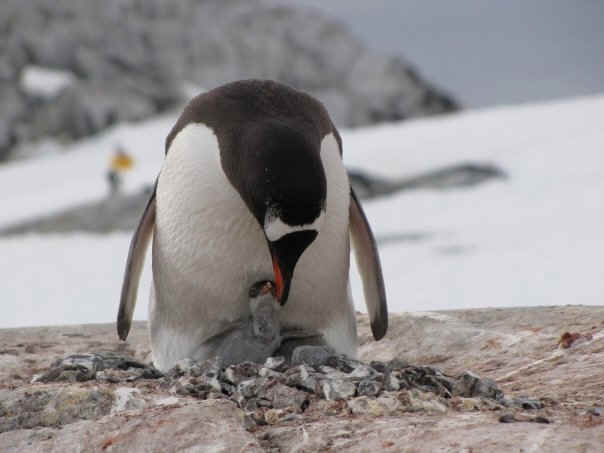
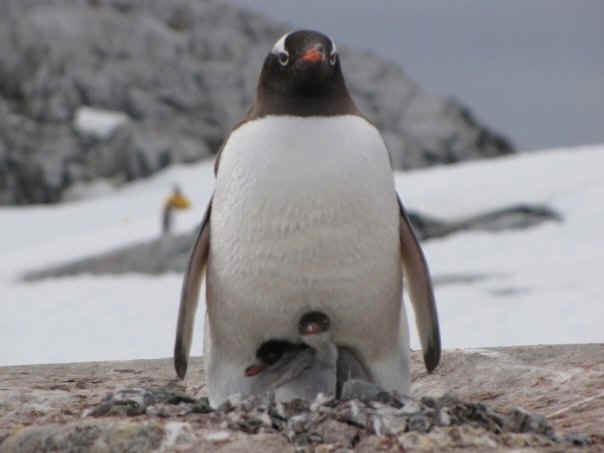
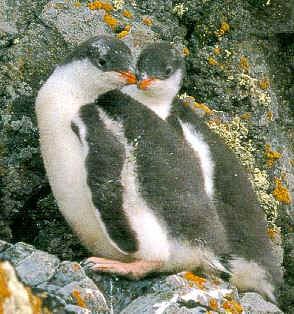
Penguin and Chick Credit: Mark Terry http://www.theantarcticachallenge.com
Penguins are flightless birds found in the Southern Hemisphere from the Antarctic to the equator. There are 18 species of penguins in the southern water, seven of them live around Antarctica.
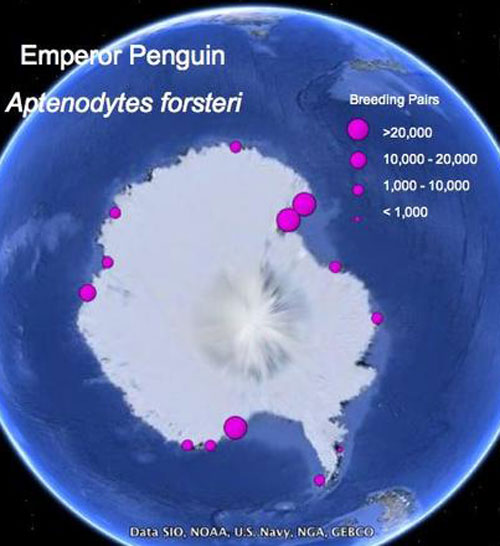
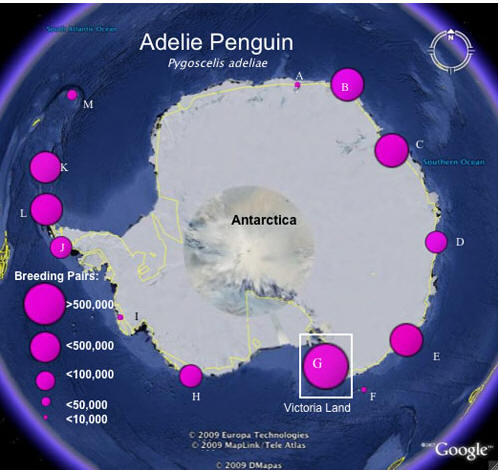
The Adelie and emperor breed on the Antarctic shores and are the only two species found in the Ross Sea area.
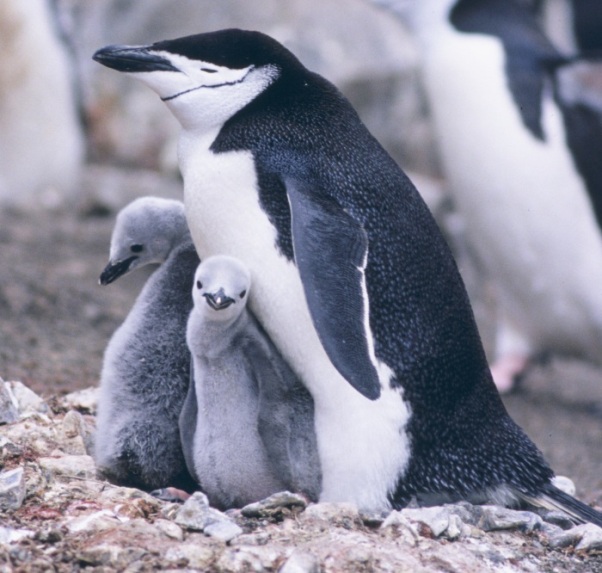
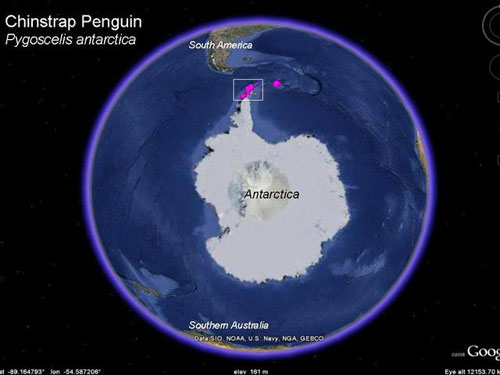
Chinstrap Penguin
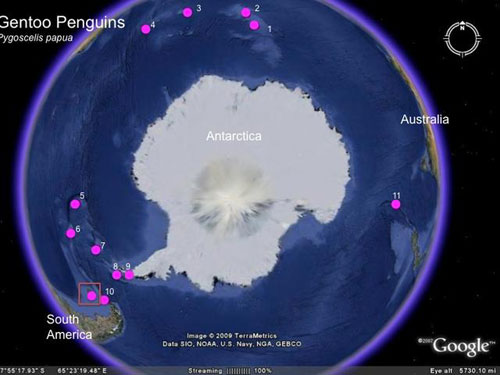
Chinstraps breed on islands around Antarctica and gentoos are found from the Antarctic islands to the sub-Antarctic.
Gentoo Penguin
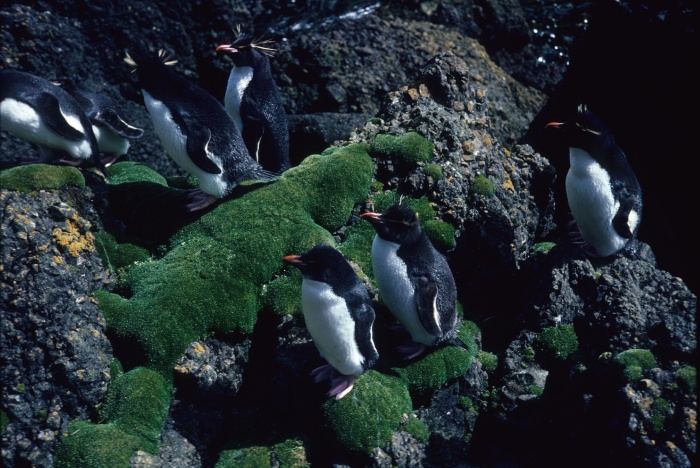
Another three species (the King, rockhopper and macaroni) live on the sub-Antarctic islands.
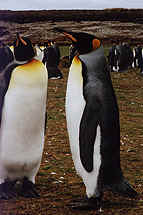
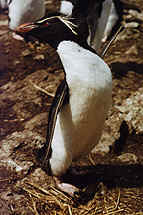
King and Rockhopper Penguins
Because ice covers almost all of Antarctica, penguins have to get all their food from the sea, where they spend about half their time. They are able to dive very deeply (emperors can dive to 250 meters) and all are excellent swimmers. The feet and tail act as a rudder and the flippers as propellers. They feed mostly on small fish and krill, each one captured individually. The penguins are also food for other ocean predators: leopard seals and killer whales. On land their main predator is the skua, a bird which takes both eggs and chicks.
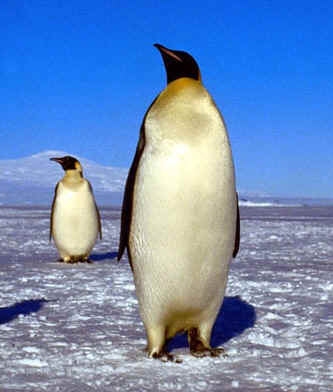
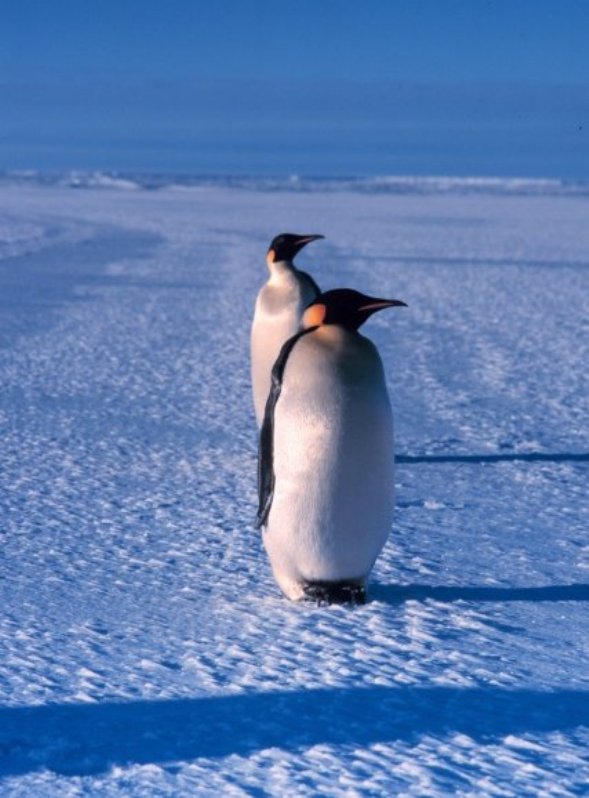
Emperor Penguin
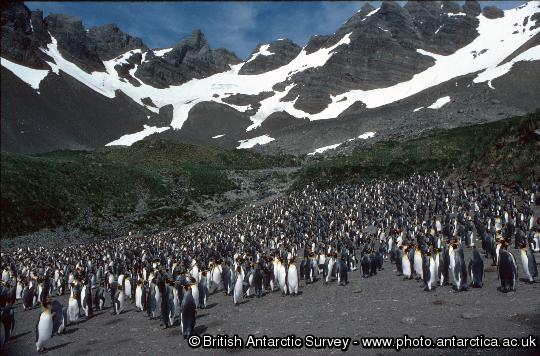
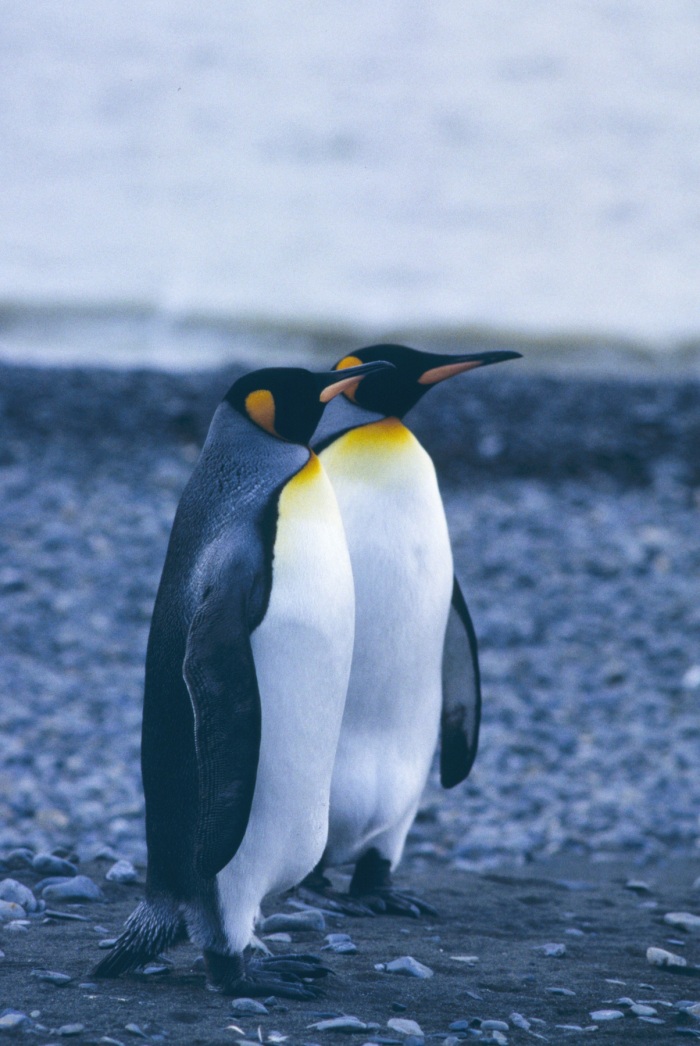
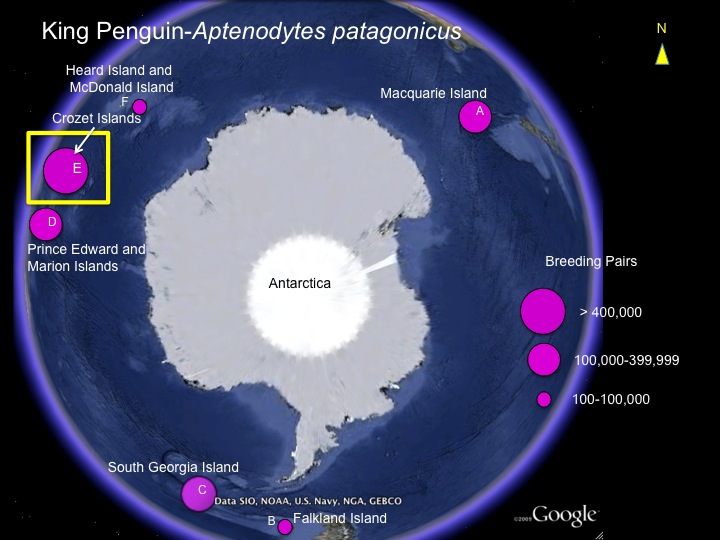
King penguins (Aptenodytes patagonicus) provide a real wildlife spectacle on the island of South Georgia, where 400,000 pairs breed. These birds were photographed at Royal Bay, South Georgia
Emperor
size: 11 2 cm (44 in.), 27 to 41 kg (60-90 lb.)
Gentoo
size: 61 to 76 cm (24-30 in.),
5.5 to 6.4 kg (12-14 lb.) Chinstrap
size: 46 to 61 cm (1 8-24 in.), 4
kg (9 lb.) Rockhopper
size: 41 to 46 cm (i 6-18 in.),
about 2.3 to 2.7 kg (5-6 lb.)
size: 51 to 61 cm (20-24 in.),
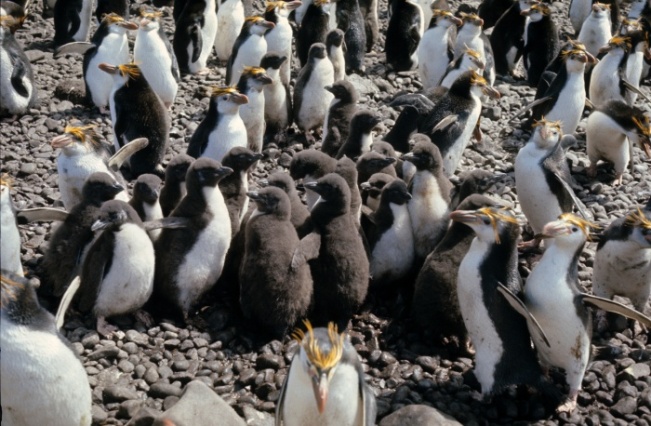
4.5 kg (1 0 lb.) Royal
size: 66 to 76 cm (26-30 in.),
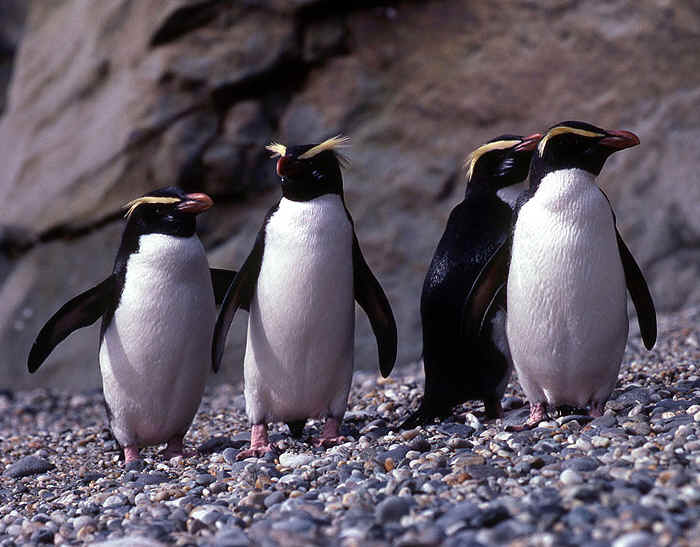
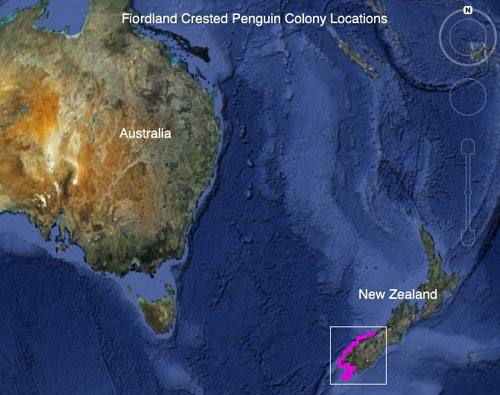
5.5 kg (1 2 lb.) Fiordland crested
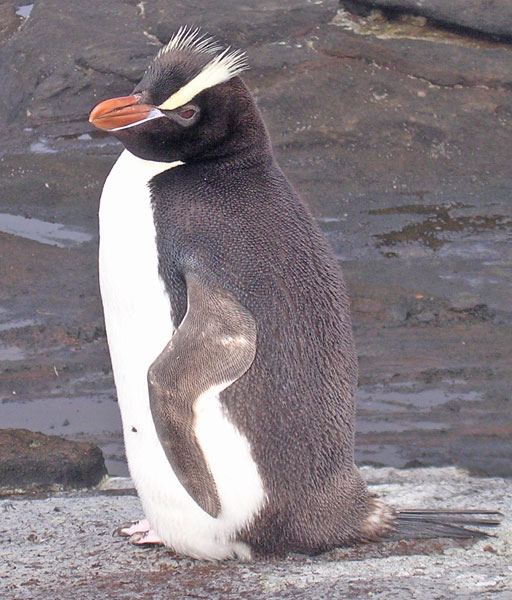
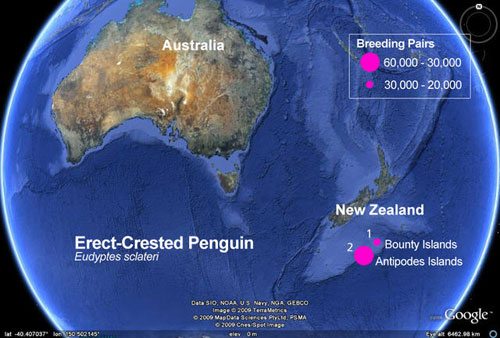
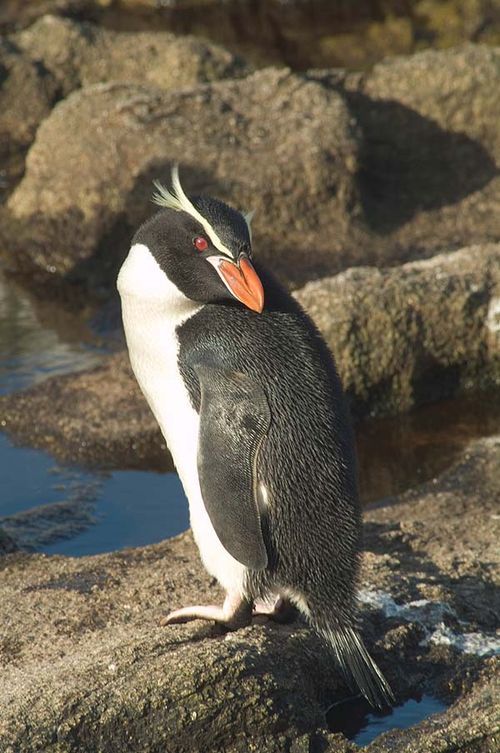
size: 61 cm (24 in.), 2.7 to 3 kg (6-7 lb.) erect-crested
size: 63.5 cm (25 in.), 2.7 to
3.5 kg (6-7.7 lb.)
size: 63.5 cm (25 in.), 2.7 to 3
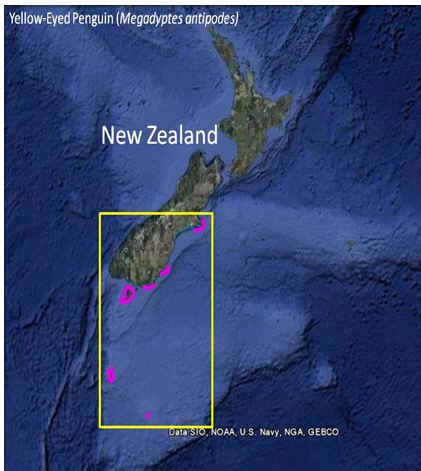
kg (6-7 lb.) yellow-eyed
fairy
Magellanic
size: 61 to 71 cm (24-28 in.), 5
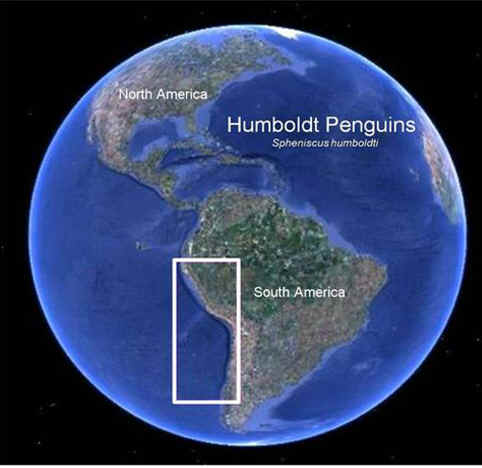
kg (11 lb.) Humboldt
size: 61 to 71 cm (24-28 in.), 3
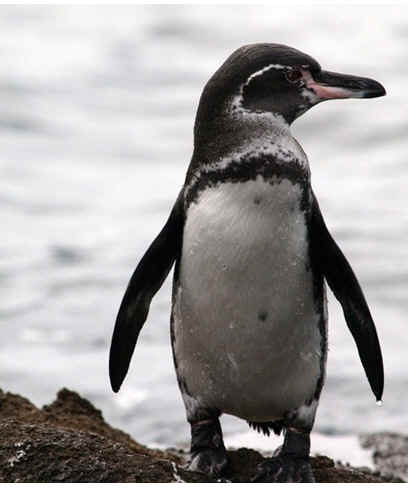
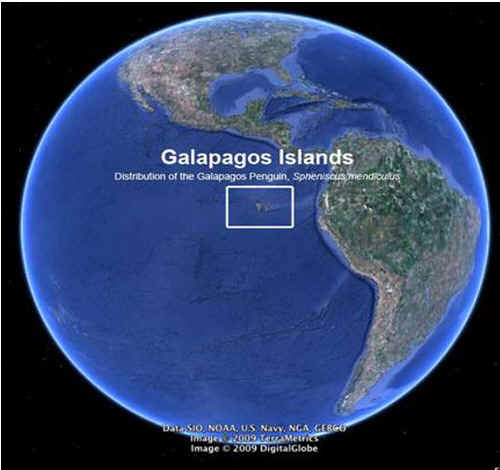
kg (7 lb.) Galapagos
size: 53 cm (21 in.), 2.5 kg (5-6
lb.)
Credit: University of Washington,NOAA, British Antarctic Survey, Mark Terry |